
Wellness & Practice — ZENWITHIN
Yoga, meditation, and intentional skincare don't just feel good — they activate your parasympathetic nervous system and interrupt the loop of self-doubt at its source.
Self-doubt isn't only a thought pattern. It lives in the body — in the tight jaw during a hard conversation, the shallow breath before a meeting, the tension across your shoulders that won't release no matter how much you tell yourself to relax. Because it has a physical home, it responds to physical intervention. That's not soft science. That's neurobiology.
What self-doubt actually feels like — and why that matters
The inner critic speaks in absolutes. You can't. You're not enough. Everyone else has it figured out. It's relentless, and it's fast. But here's what often goes unnoticed: that voice has a physical signature, and your body is listening to it long before your conscious mind catches up.
Self-doubt shows up as a tight jaw, shallow breathing, tension across the chest, clenched hands during savasana. For many women navigating the pressures of their 30s, 40s, and 50s — careers, caregiving, the particular exhaustion of holding a great deal together — that signature can quietly become a baseline.
You can't always think your way out of that state. But you can move, breathe, and touch your way into a calmer one. And in that shift, a small gap opens between you and the critical voice. In that gap, perspective lives.
You can't always think your way out of self-doubt. But you can move, breathe, and touch your way into a calmer state — and in that gap, perspective lives.

Intentional touch is a nervous system event
When you slowly apply body butter to your shoulders after practice, or work through an exfoliant with attention rather than hurry, you're activating your parasympathetic nervous system — the branch responsible for rest, digestion, and the felt sense of safety. This is the direct physiological opposite of the fight-or-flight response that self-doubt hijacks.
The ritual itself matters as much as the product. Slowing down to care for your body is a form of self-validation that bypasses the skeptical mind entirely. Your body experiences the proof in real time: I deserve this time. I deserve gentleness. That message lands differently than an affirmation in the mirror, because you're not trying to convince yourself of anything — you're demonstrating it through action.
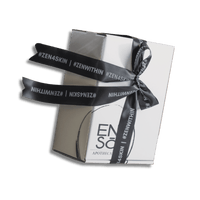
This is why ZEN4SKIN formulas are designed for mindful application. Coconut oil-based body butters, handmade vegan soaps, light botanical moisturizers — products that reward slowing down.
Clean, plant-based skincare designed for intentional application. Each formula is an invitation to pause — and in that pause, to practice being kind to yourself.
Yoga flows, guided meditations, and breathwork practices that build nervous system resilience over time. The inner work that makes the outer work matter.
Why yoga does more than relax you
Yoga and meditation don't just take the edge off — they regulate your autonomic nervous system. A regulated nervous system is one that can distinguish between real threat and imagined inadequacy. When you're dysregulated — stuck in low-grade activation from overwork, chronic stress, or too much screen time — everything can feel like evidence that you're not enough.
Regular movement, especially slow and intentional practice like vinyasa or restorative yoga, builds your capacity to shift from activation to calm. Over time, that practiced shift becomes your default response. Self-doubt loses its foothold when your body stops interpreting ordinary challenges as emergencies.
The signs show up quietly: you pause before reacting to a critical thought instead of spiraling. Your breath stays steadier in moments that once triggered anxiety. The physical tension — the tight chest, the knotted stomach — that was offering your mind "evidence" for self-doubt starts to dissolve.

Why ritual works where willpower doesn't
Willpower says: Stop doubting yourself. Ritual says: Here's something kind to do with your hands right now.
A morning skincare ritual — cleansing with a handmade vegan soap, applying a light coconut-based moisturizer, taking three slow breaths before moving on — doesn't require you to believe in yourself first. It just asks you to show up. The confidence builds from the repeated action, not the other way around.
Ritual anchors your day in something tangible. It gives you a reference point your body remembers even when your mind is noisy.
-
01
Begin with breath
Three rounds of slow inhale-exhale before you touch your mat, your soap, or your skin. This signals the nervous system before anything else begins.
-
02
Add mindful touch
Whether you're exfoliating before a shower or applying body butter after practice, keep your attention on the sensation rather than your to-do list. The quality of attention is the practice.
-
03
Close with one honest statement
Not a forced affirmation — something true. Even small: I showed up for myself today. Evidence, not aspiration.
What physical self-care actually does
Self-doubt speaks in absolutes. Your body, when cared for, speaks in sensation: warm water, soft skin, steady breath, muscles releasing. Those two languages can't occupy the same space at the same volume.
Every time you choose the body's language — through a yoga flow, a slow skincare ritual, a few minutes of seated stillness — you turn down the volume on the critic. Not permanently, not perfectly, but enough. Enough to take the next step without needing to feel certain first.
That's what physical self-care actually does. It doesn't eliminate self-doubt. It gives you something truer to listen to.
Ensō Apothecary
Begin the practice.
Explore ZEN4SKIN and ZENWITHIN — two lines designed to work together, inside and out.
Shop the Collection